
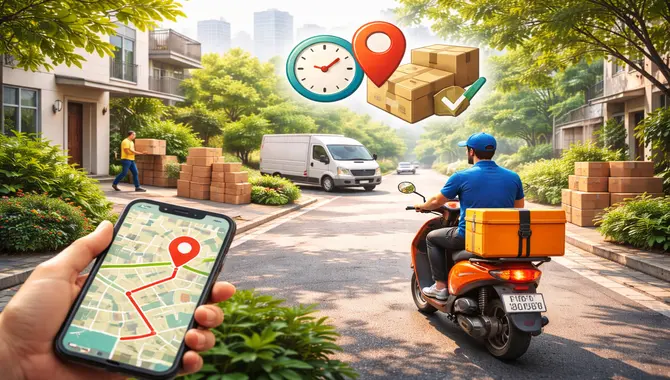
In Latin America, last-mile delivery is not a fulfillment detail. It is one of the main determinants of profitability. Companies entering or scaling in the region often focus on demand generation, pricing, and expansion strategy only to discover later that margins are being eroded where it matters most: at the point of delivery.
In LATAM, last-mile performance directly impacts revenue, cash flow, and customer retention. Treating it as a cost center rather than a profit lever is one of the most expensive mistakes companies make.
Last mile is where revenue becomes real
A sale is not complete when a customer clicks “buy.” In Latin America, revenue is only realized when:
- The package reaches the customer.
- The delivery is accepted.
- Payment is successfully collected (in COD models).
- Funds are settled back to the business.
Each failed delivery, rejection, or delay directly reduces net revenue. Unlike mature markets, where delivery success rates are relatively stable, last-mile variability in LATAM is high and must be actively managed.
Companies that ignore this reality often see:
- Inflated gross revenue with weak net realization.
- High return and rejection rates.
- Unpredictable cash flow.
- Rising operational costs hidden behind growth metrics.
Why last-mile performance varies so much in LATAM
Latin America is not operationally uniform. Last-mile outcomes depend heavily on local factors such as:
- Urban density and informal addressing systems.
- Infrastructure differences between cities.
- Consumer availability and delivery preferences.
- Payment behavior, especially with Cash on Delivery (COD).
Global delivery benchmarks do not translate well into this environment. A “good” delivery rate in one country may be unsustainable in another if execution is not localized.
This is why centralized, one-size-fits-all logistics models consistently underperform in the region.
The profitability equation most teams overlook
Last-mile performance affects more than delivery costs. It directly influences:
- Conversion rates: Customers are more likely to order when delivery is reliable.
- Customer lifetime value: Failed deliveries reduce repeat purchases.
- Cash flow: Delays in delivery delay payment, especially under COD.
- Unit economics: Reattempts, returns, and reverse logistics compound costs.
Even small improvements in delivery success rates can have a disproportionate impact on profitability. For example, reducing failed deliveries by a few percentage points can significantly improve net margins at scale.
COD amplifies the impact of last-mile execution
In many LATAM markets, COD remains a key payment method. While it increases conversion, it also raises operational stakes.
With COD:
- A failed delivery means zero revenue and added cost.
- Cash handling requires traceability and discipline.
- Settlement timing affects working capital.
- Delivery agents become part of the payment flow.
Without strong last-mile control, COD can erode margins quickly. With the right infrastructure, it becomes a powerful revenue accelerator.
The difference is execution not the payment model itself.
Why outsourcing alone is not enough
Many companies assume that outsourcing last mile solves the problem. In LATAM, this is rarely true.
Common issues include:
- Fragmented providers across countries.
- Lack of standardized performance metrics.
- Limited visibility into delivery outcomes.
- Weak reconciliation between delivery and payment data.
Outsourcing without integration often creates operational blind spots. Profitability suffers not because delivery is expensive, but because performance is unmanaged.
How Kiki Latam turns last mile into a profit lever
Kiki Latam operates last-mile logistics in Latin America with a focus on performance, control, and scalability not just coverage.
Through its services, companies gain:
- Local last-mile operations adapted to each market.
- Consistent performance standards across countries.
- Integrated COD delivery and cash collection.
- Clear settlement processes and reporting.
- Reduced delivery failures through local execution.
This allows businesses to improve net revenue realization without sacrificing growth speed.
👉 Learn how Kiki Latam structures last-mile operations across LATAM here.
Instead of treating each country as a separate logistical problem, companies operate under a unified framework that still respects local realities.
Last mile as a strategic advantage, not an operational burden
Companies that scale profitably in LATAM do not ask, “How cheap is delivery?” They ask, “How reliable is delivery at scale?”
Strong last-mile performance enables:
- Faster market entry.
- Higher conversion without discounting.
- Better cash flow predictability.
- Lower operational volatility.
- Stronger customer trust.
Over time, these advantages compound and become difficult for competitors to replicate.
Planning last-mile strategy before growth accelerates
The worst time to rethink last-mile logistics is after growth accelerates. At that point, problems are expensive, urgent, and disruptive.
Companies that plan ahead:
- Design logistics for scale, not patchwork fixes.
- Align payments, delivery, and settlements early.
- Choose partners with local execution capability.
- Protect margins as volume grows.
As companies look toward 2026 and beyond, last-mile performance should already be part of strategic planning not a reaction to operational stress.
If your company is expanding in Latin America or experiencing margin pressure despite revenue growth, last-mile performance deserves immediate attention.
👉 Speak with a Kiki Latam expert to evaluate how your delivery operations impact profitability and how to optimize them for scale.