
How to Expand Internationally Without Building Local Infrastructure
International expansion no longer has to begin with leasing a warehouse, hiring a local operations team, negotiating separate last-mile contracts, and building a payment structure in every target country. Ecommerce brands, D2C companies, Nutra and Beauty offer owners, and performance marketers can now enter new markets through an integrated regional partner that already has the logistics, technology, payment, and operational capabilities in place.
For companies evaluating ecommerce expansion into Latin America, this model reduces fixed costs and shortens the time between market validation and commercial scale. Instead of building infrastructure before demand is proven, a business can launch with a flexible operating structure and increase capacity as order volume grows.
What Does Expansion Without Local Infrastructure Mean
Expansion without local infrastructure means selling and distributing products in a new country without creating every operational component from zero. The brand retains control of its product, customer acquisition, pricing, and growth strategy, while a specialized partner manages the local execution required to deliver orders and collect payments.
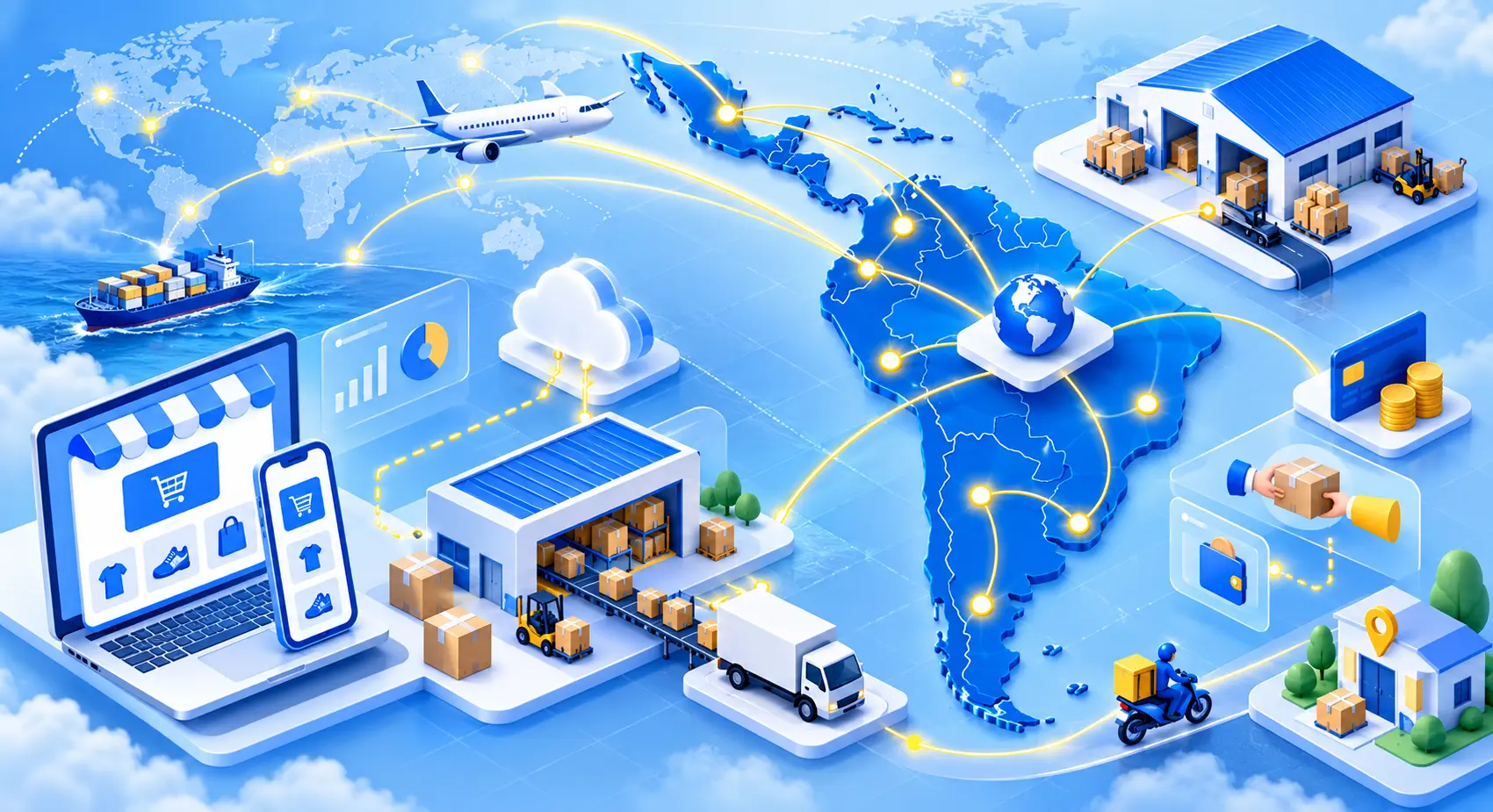
Depending on the market and business model, this can include product storage, fulfillment, last-mile delivery, Cash on Delivery, prepaid payment options, order confirmation, delivery rescheduling, technology integrations, and international settlement. A regional platform such as Kiki LATAM can coordinate these functions across several countries through a single operational relationship.
Why Traditional Market Entry Creates Unnecessary Risk
The traditional approach to international market entry requires significant investment before the company has reliable evidence of demand. Warehouses, legal structures, employees, software integrations, carrier agreements, and payment processes create fixed costs and operational complexity. If customer acquisition costs, delivery rates, or product-market fit fail to meet expectations, the company may be left with infrastructure it cannot use efficiently.
Fragmentation creates another problem. When storage, fulfillment, delivery, payment collection, and customer communication are handled by different providers, accountability becomes unclear. Data is distributed across systems, operational decisions take longer, and teams spend more time coordinating vendors than improving profitability.
A More Flexible Model for Ecommerce Expansion in Latin America
An asset-light expansion strategy converts much of the upfront investment into variable operating costs. Companies can test a country with controlled inventory, measure real demand, and expand only when performance supports the decision. This is especially relevant in Latin America, where payment preferences, addressing quality, delivery conditions, and consumer behavior can vary materially by market.
The strongest model is not simple outsourcing. It is coordinated market execution. A partner must connect inventory management, order processing, delivery, payment collection, customer communication, and performance data. This creates a clearer view of delivered-order economics rather than relying only on leads, checkout events, or orders created.
The Capabilities a Regional Expansion Partner Should Provide
Multi-country fulfillment
Inventory should be stored, picked, packed, and dispatched through processes that can scale across priority markets.
Reliable last-mile delivery
Local carrier coordination, delivery visibility, and exception management directly affect customer experience and delivered-order profitability.
Cash on Delivery and prepaid payments
The operating model should support the payment methods customers use, including COD where it remains commercially relevant.
Order confirmation and rescheduling
Proactive customer communication can reduce failed deliveries and avoidable returns.
Technology integration
APIs and ecommerce integrations should connect orders, inventory, tracking, and operational data without forcing the brand to rebuild its technology stack.
International settlement
Companies need a practical way to receive collected funds and reconcile transactions across markets and currencies.
How Kiki LATAM Supports Market Entry
Kiki LATAM is a 5PL logistics platform designed to help companies sell and operate across Latin America through one coordinated ecosystem. Kiki LATAM connects operational capabilities that would otherwise require several local suppliers, helping international sellers reduce complexity while maintaining visibility over the order lifecycle.
Through a single regional relationship, companies can access warehousing, fulfillment, last-mile delivery, Cash on Delivery, prepaid solutions, order confirmation and rescheduling, payment capabilities, and technology integrations. This structure is particularly useful for performance-driven businesses that need to test offers quickly and evaluate results using delivered orders, collection performance, and operational cost—not only order volume.
How to Evaluate a New Market Before Scaling
A low-infrastructure launch still requires disciplined validation. Before increasing inventory or advertising spend, companies should define a test around five variables: customer acquisition cost, confirmation rate, delivery rate, return-to-origin rate, and contribution margin per delivered order. Product ticket, local payment preferences, promised delivery times, and customer support requirements should also be assessed by country.
This approach creates a practical stage-gate process. First, validate demand and operational feasibility. Second, identify the causes of cancellations, failed deliveries, and payment friction. Third, improve the offer and delivery process. Only then should the company increase media spend, inventory, or geographic coverage. International expansion becomes a measured growth decision rather than an expensive infrastructure bet
.
Frequently Asked Questions
Can a company enter Latin America without opening its own warehouse?
Yes. A company can use a regional warehousing and fulfillment partner to store inventory, process orders, and coordinate last-mile delivery without operating its own facility.
Is Cash on Delivery available for international ecommerce expansion?
COD can be integrated into the operating model in markets where it is supported and commercially appropriate. The company should assess delivery rates, confirmation processes, returns, and settlement conditions before scaling.
What businesses benefit most from this model?
D2C brands, ecommerce sellers, Nutra and Beauty companies, offer owners, and performance marketing businesses benefit when they need rapid market validation, flexible capacity, and coordinated regional operations.
How can companies reduce risk when entering a new country?
Start with a controlled test, use variable infrastructure, track delivered-order economics, and scale only after customer acquisition, delivery, collection, and margin targets are validated.
Start Your Expansion Into Latin America
Building a local operation is no longer the only path to international growth. With the right regional partner, your company can test demand, launch operations, and scale across Latin America without creating a warehouse network, local logistics team, or disconnected supplier structure in every country.
If you are evaluating Mexico, Colombia, Peru, or the United States as part of your expansion strategy, consult a Kiki LATAM expert to assess the logistics, fulfillment, delivery, payment, and integration model that fits your business.