
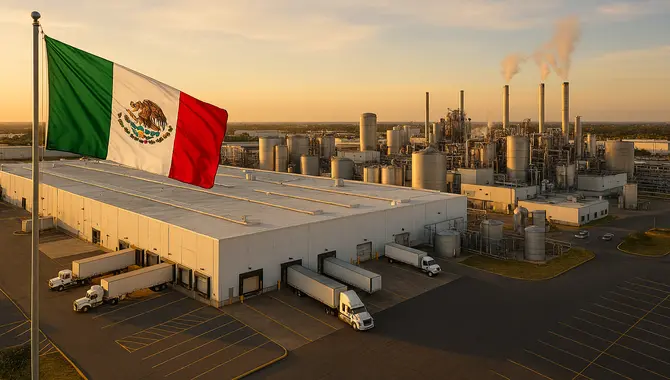
Global supply chains are undergoing structural transformation. What began as a risk mitigation strategy during trade disputes and pandemic disruptions has evolved into a long-term strategic shift: nearshoring to Mexico and broader Latin America.
For manufacturers, brands, and cross-border eCommerce operators serving the United States, relocating production and sourcing closer to end markets is no longer optional—it is a competitive necessity.
Why Nearshoring Is Accelerating?
Several structural drivers are reshaping trade flows across the Americas:
- USMCA and Trade Optimization
- Precise documentation
- Bill of materials validation
- Origin verification processes
- Customs compliance controls
- Reduced Transit Times and Working Capital Exposure
- Safety stock requirements
- Inventory carrying costs
- Exposure to freight volatility
- Cash flow pressure
- Geopolitical Risk Diversification
The United States–Mexico–Canada Agreement (USMCA) has created significant incentives for regional manufacturing. Companies that comply with rules of origin requirements can access preferential tariff treatment, reduce landed costs, and improve margin predictability.
However, compliance is not automatic. It requires:
This has elevated demand for integrated logistics and compliance management solutions.
Shifting production from Asia to Mexico or other LATAM countries shortens lead times dramatically. Shorter supply chains reduce:
For high-growth brands and B2B distributors, nearshoring improves responsiveness while stabilizing inventory planning.
Ongoing geopolitical tensions and tariff uncertainty have increased the strategic value of regionalized supply chains. Mexico and select LATAM markets offer a combination of industrial capacity, trade agreements, and geographic proximity that supports resilient supply chain architecture.
The Impact on Maritime and Land Trade Routes
Nearshoring does not simply relocate factories—it reconfigures global logistics networks.
Maritime Route Adjustments
With reduced Asia–U.S. West Coast volume in some sectors, trade lanes are diversifying. Increased intra-Americas shipping, short-sea routes, and regional consolidation hubs are gaining relevance.
Ports in Mexico and Latin America are adapting to new cargo flows, particularly in automotive, electronics, and consumer goods sectors.
Growth in Cross-Border Ground Logistics
The most significant impact is on cross-border land transportation between Mexico and the United States.
Key developments include:
- Increased truckload and intermodal demand
- Expansion of border warehousing and bonded facilities
- Higher requirements for customs brokerage coordination
- Greater need for real-time shipment visibility
Companies must now manage integrated road freight networks with customs clearance, compliance oversight, and distribution alignment.
The Rise of Value-Added Logistics Services
Nearshoring has increased demand for specialized services beyond basic transportation and storage.
Labeling and Regulatory Compliance
Products manufactured in Mexico or LATAM often require:
- Country-specific labeling
- Regulatory adaptations
- Language compliance
- Certification alignment
Failure to meet these requirements can result in customs delays or rejected shipments.
Kitting and Light Assembly
To comply with rules of origin or optimize tariff classifications, companies increasingly perform:
- Final assembly
- Component consolidation
- Repackaging
- SKU customization
These processes must be integrated within warehouse operations to maintain efficiency and compliance.
Rules of Origin Fulfillment
USMCA compliance is highly documentation intensive. Businesses require:
- Structured data management
- Supplier origin verification
- Auditable documentation systems
- Cross-border compliance coordination
This complexity is driving demand for end-to-end logistics orchestration platforms capable of integrating production, transportation, warehousing, compliance, and financial reporting.
From Fragmented Providers to Orchestrated Supply Chains
Many companies entering nearshoring environments face a common obstacle: fragmented logistics ecosystems.
Forwarders, customs brokers, warehouse operators, and payment processors often operate independently, reducing visibility and increasing operational risk.
In a nearshoring strategy, this fragmentation creates bottlenecks:
- Delays in customs clearance
- Inconsistent documentation
- Inventory misalignment
- Cash flow inefficiencies
- Limited cross-border financial visibility
The solution is not adding more vendors—it is integrating them under a centralized orchestration model.
The Strategic Advantage of Integrated 5PL / FIPL Models
A 5PL (FIPL) logistics platform coordinates the entire supply chain lifecycle:
- Onboarding and due diligence
- Production alignment
- International freight coordination
- Cross-border ground transportation
- Warehousing and fulfillment
- Merchant of Record (where applicable)
- Payment collection (including COD)Payment collection (including COD)
- Revenue consolidation and repatriation
- Fraud, legal, and reporting oversight
In a nearshoring environment, this integration enables:
- Faster customs processingFaster customs processing
- Reduced compliance risk
- Inventory optimization across marketsInventory optimization across markets
- Financial transparency across countries
- Scalable regional expansion
The goal is not merely cost reduction—it is structural resilience.
Why Mexico and LATAM Are Strategic Supply Chain Hubs
Mexico has emerged as a primary nearshoring destination due to:
- Geographic proximity to the U.S.
- Mature industrial clusters
- USMCA advantages
- Growing infrastructure investment
Meanwhile, Colombia, Peru, and other LATAM markets are strengthening their position as regional distribution and consumption hubs.
Companies that design regionalized supply chain architecture today will gain long-term competitive advantages in delivery speed, margin stability, and market expansion.
How Kiki Latam Supports Nearshoring Strategies
Kiki Latam operates as an integrated 5PL / FIPL logistics platform across Mexico, Colombia, Peru, and the United States.
By orchestrating transportation, warehousing, compliance, Merchant of Record services (active in the U.S. and expanding in LATAM), payment collection, and financial consolidation, Kiki enables companies to execute nearshoring strategies with operational clarity.
Kiki does not assume commercial risk or guarantee sales; clients maintain ownership of production, inventory, and commercial strategy. What Kiki provides is operational architecture, cross-border coordination, and end-to-end visibility—critical capabilities in reconfigured trade environments.Kiki does not assume commercial risk or guarantee sales; clients maintain ownership of production, inventory, and commercial strategy. What Kiki provides is operational architecture, cross-border coordination, and end-to-end visibility —critical capabilities in reconfigured trade environments.
Nearshoring Is Not a Trend. It Is a Structural Shift.Nearshoring Is Not a Trend. It Is a Structural Shift.
The reconfiguration of trade flows across the Americas is accelerating. Companies that treat nearshoring as a short-term adjustment will struggle. Those that redesign their supply chains with integrated orchestration will outperform.
If your organization is evaluating production relocation, cross-border logistics optimization, or USMCA compliance strategy:
✅ Speak with a Kiki Latam expert.
👉 Nearshoring rewards preparedness. The right logistics architecture determines whether it becomes a competitive advantage—or an operational burden.