
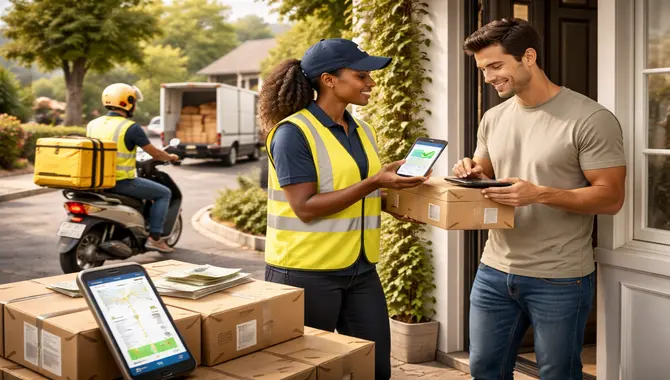
Last-mile delivery is the moment of truth in e-commerce. It’s where promises are either fulfilled—or broken. In LATAM, where delivery conditions vary dramatically by city and country, last-mile execution directly impacts conversion rates, customer trust, repeat purchases, and margins. This article explains why last-mile delivery is a strategic growth lever, the most common failure points in LATAM, and how a seamless last-mile model improves both customer experience and business performance.
Why last-mile delivery matters more than any other logistics stage
You can have:
- A great product
- A competitive price
- Strong marketing
But if last-mile delivery fails, none of that matters.
From the customer’s perspective, delivery is the brand.
Late deliveries, failed attempts, poor communication, or payment issues don’t feel like “logistics problems.” They feel like broken promises.
The LATAM last-mile reality (and why global models fail here)
LATAM last-mile delivery operates under conditions that differ from mature markets.
Structural challenges:
- Inconsistent address systems
- High traffic congestion
- Security and access constraints
- Fragmented carrier networks
- High reliance on Pay on Delivery (COD)
Applying a US or EU last-mile model without adaptation leads to poor outcomes.
How last-mile delivery impacts conversion before the purchase
Last-mile performance doesn’t start after checkout.
It starts before the customer clicks “Buy.”
Delivery promises affect:
- heckout completion
- Payment method selection
- Cart abandonment
- Brand credibility
If delivery feels uncertain, customers hesitate—or choose COD to reduce risk.
The trust equation: speed, reliability, and transparency
Customer trust is built on three last-mile pillars:
- Speed – realistic delivery times
- Reliability – high success rate on first attempt
- Transparency – clear tracking and communication
Fail one, and trust erodes quickly.
Common last-mile mistakes that hurt performance
1. Optimizing for cost instead of success
Cheap last-mile options often result in:
- Failed deliveries
- Multiple attempts
- Higher overall cost
- Customer frustration
Cost per delivery is meaningless without success rate.
2. Using one carrier for every scenario
No single carrier performs best everywhere.
Last-mile performance varies by:
- City
- Neighborhood
- Delivery window
- Payment method
Carrier diversification and orchestration matter.
3. Treating COD as a “payment issue”
In LATAM, COD is a last-mile execution issue.
Poor COD handling causes:
- Delivery refusals
- Cash reconciliation delays
- Inventory lockup
COD must be operationally designed—not just enabled.
What “seamless” last-mile delivery actually means
Seamless last-mile delivery is not about perfection.
It’s about predictability and control.
It includes:
- Carrier selection by performance
- Route optimization
- First-attempt success focus
- COD-ready processes
- Exception management
Seamless means fewer surprises—for both the customer and the business.
Why last-mile delivery directly affects retention and LTV
A successful first delivery does more than close a sale.
It:
- Builds confidence
- Reduces support tickets
- Increases repeat purchases
- Encourages prepaid payments in the future
In LATAM, great last-mile execution converts first-time buyers into long-term customers.
The operational side: last-mile without fulfillment alignment fails
Last-mile delivery cannot be isolated.
It must be aligned with:
- Inventory availability
- Picking and packing accuracy
- Dispatch timing
- Payment status
When fulfillment and last-mile are disconnected, delays and errors multiply.
This is where Kiki Latam plays a critical role
Kiki Latam approaches last-mile delivery as part of an integrated system—not a standalone service.
The objective is delivery success at scale, not just shipment completion.
How Kiki Latam enables seamless last-mile delivery
1. Performance-based carrier orchestration
Kiki works with multiple last-mile networks and selects carriers based on:
- Geography
- Delivery success rate
- COD capability
- Historical performance
This avoids dependency on a single provider.
👉 Explore last-mile and logistics services.
2. COD-ready last-mile operations
Kiki designs last-mile workflows that support:
- Pay on Delivery (COD)
- Secure cash handling
- Delivery confirmation tied to payment
- Faster reconciliation
This reduces failed deliveries and improves cash flow predictability.
3. Real-time visibility and exception handling
Seamless delivery requires visibility.
Kiki provides:
- Order and delivery tracking
- Status updates
- Exception alerts
- Operational reporting
Visibility turns last-mile from reactive to manageable.
4. Fulfillment and last-mile alignment
Because Kiki manages fulfillment and last-mile together:
- Orders leave the warehouse ready for delivery
- Dispatch timing is optimized
- Inventory and delivery data stay aligned
This reduces friction across the entire operation.
Metrics that define last-mile success
If you want to improve last-mile performance, track these:
- First-attempt delivery success rate
- Average delivery time
- Failed delivery percentage
- Cost per successful delivery
- COD collection rate
Optimizing the wrong metrics leads to the wrong decisions.
When last-mile delivery becomes a competitive advantage
In crowded markets, customers choose brands that:
- Deliver when promised
- Communicate clearly
- Handle payments smoothly
- Resolve issues quickly
Last-mile excellence differentiates without changing product or price.
Last-mile delivery and scalability in LATAM
As volume grows:
- Small inefficiencies compound
- Manual processes break
- Support costs increase
A scalable last-mile model absorbs growth without degrading experience.
Looking ahead: last-mile delivery in 2026
Customer expectations will continue to rise.
Winning brands will:
- Offer reliable delivery, not just fast delivery
- Execute COD efficiently
- Use data to optimize routes and carriers
- Integrate last-mile into growth strategy
Last-mile delivery will be a baseline expectation—not a bonus.
Last-mile delivery is where trust is earned
Marketing attracts customers.
Products satisfy needs.
Last-mile delivery builds trust.
If your e-commerce operation in LATAM struggles with failed deliveries, low conversion, or poor retention, the issue is often last-mile execution.
If you want to turn delivery into a competitive advantage, talk to a team that designs last-mile for real-world conditions.